
876 Phone Area Code – Complete Location & Scam Guide
If you’ve received a call from the 876 phone area code, you’re not alone. Thousands of people search this number every month asking:
-
Where is 876 located?
-
Is it safe to answer?
-
Why is it often linked to scams?
-
Should I call back?
In this comprehensive guide, we’ll cover everything you need to know about the 876 phone area code — from its geographic location to real-world scam tactics, prevention strategies, and expert safety tips.
Whether you’re a beginner trying to understand area codes or a professional managing phone security, this article will give you clarity and confidence.
Quick Answer: Where Is the 876 Phone Area Code Located?
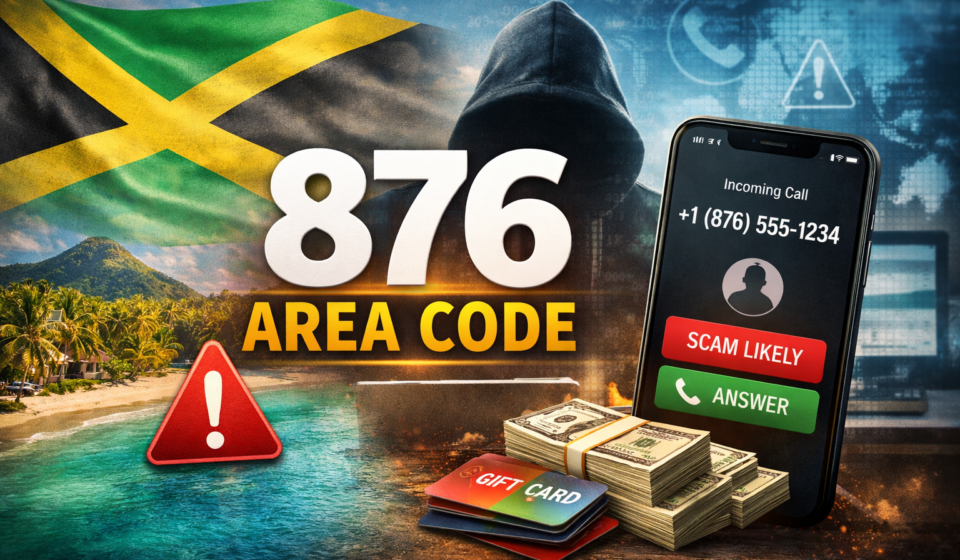
The 876 phone area code belongs to Jamaica, a Caribbean island nation.
It is part of the North American Numbering Plan (NANP), which means it follows the same dialing format as the United States and Canada.
Country: Jamaica
Region: Caribbean
Dialing format from U.S.: 1-876-XXX-XXXX
Because Jamaica shares the NANP system, calls from the 876 area code may look domestic to U.S. residents — even though they are international.
Understanding the 876 Phone Area Code
What Is an Area Code?
An area code is a three-digit number that identifies a specific geographic region within a telephone numbering system.
The 876 area code:
-
Covers most of Jamaica
-
Was introduced in 1997
-
Operates under the North American numbering structure
In 2018, Jamaica introduced an overlay area code (658) due to increased demand. However, 876 remains the most recognized and widely used Jamaican area code.
Why Is the 876 Phone Area Code So Commonly Reported?
The 876 phone area code has gained attention primarily because of its association with international lottery and prize scams.
Let’s break down why.
1. Shared Numbering System Confusion
Since Jamaica is part of the NANP:
-
Calls start with +1
-
Numbers resemble U.S. or Canadian numbers
-
Many people assume it’s a domestic call
This similarity increases the likelihood of people answering unknown calls.
2. Long-Running Lottery Scam Operations
Jamaica has historically been linked to lottery scams targeting U.S. and Canadian residents. Fraudsters use the 876 phone area code to:
-
Claim you’ve won a prize
-
Request “processing” or “tax” fees
-
Ask for wire transfers or gift cards
Victims often lose thousands of dollars.
Common 876 Phone Area Code Scams
Let’s examine the most reported scams in detail.
1. Lottery or Sweepstakes Scam
How it works:
You receive a call stating you’ve won:
-
A large cash prize
-
A luxury car
-
An international vacation
The caller asks for:
-
A small “fee” to release winnings
-
Tax payments
-
Shipping costs
Reality: Legitimate lotteries never charge upfront fees.
2. Grandparent or Emergency Scam
The caller pretends to be:
-
A grandchild in jail
-
A relative in an accident
-
A friend in urgent trouble
They request immediate financial help.
3. Romance Scam
The fraudster builds an emotional relationship and later:
-
Claims financial hardship
-
Requests money transfers
-
Asks for expensive gifts
4. IRS or Government Impersonation
Scammers pretend to represent:
-
Tax authorities
-
Immigration offices
-
Law enforcement
They threaten legal consequences unless payment is made immediately.
Is the 876 Phone Area Code Always a Scam?
No — and this is important.
The 876 phone area code is legitimate and belongs to Jamaica. Millions of law-abiding residents and businesses use it daily.
Examples of legitimate calls:
-
Jamaican businesses
-
Tourism companies
-
Family or friends
-
Customer service departments
Jamaica is a major tourist destination, and many hospitality services use 876 numbers.
Should You Answer a Call From the 876 Phone Area Code?
Here’s a practical decision framework:
| Situation | Recommendation |
|---|---|
| You know someone in Jamaica | Safe to answer |
| You’re expecting a business call | Answer cautiously |
| Random call, no context | Let it go to voicemail |
| Caller asks for money | Hang up immediately |
Pro Tip: Never call back unknown international numbers. Some scams involve premium-rate charges.
How to Identify a Scam Call From 876
Watch for these red flags:
-
Caller pressures you to act immediately
-
Requests payment via gift cards
-
Asks for wire transfers
-
Threatens arrest
-
Refuses to provide written verification
-
Claims secrecy
If you hear these signs, disconnect immediately.
What Happens If You Call Back?
Calling back a suspicious 876 phone area code number can:
-
Connect you to a scammer
-
Trigger international calling fees
-
Confirm your number is active
-
Increase future scam attempts
In rare cases, it may connect to premium-rate services that charge high per-minute fees.
Real-World Case Example
A retired U.S. resident received a call from an 876 number claiming she won $2.5 million. She was told to send $5,000 for taxes.
After sending the money via wire transfer, the caller requested additional payments. The total loss exceeded $25,000.
Authorities later traced the operation to a lottery scam ring based in Jamaica.
How to Protect Yourself From 876 Phone Area Code Scams
1. Don’t Share Personal Information
Never provide:
-
Social Security numbers
-
Banking details
-
Home address
-
Date of birth
2. Use Call Blocking Apps
Install apps that:
-
Identify spam numbers
-
Auto-block international scam patterns
3. Register on Do Not Call Lists
While it won’t stop international calls entirely, it reduces legitimate telemarketing calls.
4. Report Suspicious Calls
Report scam attempts to:
-
Federal Trade Commission (FTC)
-
Local consumer protection agencies
-
Your phone carrier
Why Jamaica Became Associated With Phone Scams
Several factors contributed:
-
English-speaking population
-
Access to U.S. phone systems
-
Economic challenges
-
Organized fraud networks
However, Jamaican authorities have made strong efforts to crack down on fraud operations.
It’s important not to stereotype an entire country due to criminal activity.
Dialing the 876 Phone Area Code Correctly
If you legitimately need to call Jamaica:
From the U.S. or Canada:
From outside North America:
876 vs Other Caribbean Area Codes
Here’s how 876 compares:
| Area Code | Country |
|---|---|
| 876 | Jamaica |
| 242 | Bahamas |
| 246 | Barbados |
| 868 | Trinidad & Tobago |
Each belongs to the NANP but represents different Caribbean nations.
Businesses That Legitimately Use 876 Numbers
-
Resorts
-
Tour operators
-
Export companies
-
Customer support centers
-
Family-owned enterprises
Jamaica’s tourism industry is globally recognized, with millions visiting annually.
Advanced: How Phone Scammers Manipulate Caller ID
Scammers may use:
-
VoIP technology
-
Caller ID spoofing
-
Rotating number banks
This makes it appear as if the call comes from a legitimate 876 phone area code number — even when it doesn’t.
People Also Ask (FAQs)
Where is the 876 phone area code located?
The 876 phone area code is located in Jamaica, a Caribbean nation within the North American Numbering Plan.
Is the 876 phone area code safe?
The area code itself is legitimate. However, it has been widely used in lottery and financial scams. Always verify before responding.
Why do scammers use the 876 phone area code?
Because Jamaica shares the +1 country code with the U.S., calls look domestic and increase answer rates.
Should I block 876 numbers?
If you have no connections to Jamaica and receive repeated suspicious calls, blocking is a smart precaution.
Can you trace an 876 scam call?
Authorities can trace some calls, but many scammers use VoIP and spoofing tools, making tracking difficult.
SEO & Content Optimization Insights
Focus Keyword:
876 phone area code
Semantic Keywords:
-
Jamaica area code
-
876 scam calls
-
lottery scam Jamaica
-
international scam numbers
-
Caribbean phone codes
Keyword usage remains natural and context-driven.
Final Thoughts: Should You Worry About the 876 Phone Area Code?
Here’s the bottom line:
-
The 876 phone area code is legitimate and belongs to Jamaica.
-
It has been heavily used in lottery and financial scams.
-
Not every 876 call is fraudulent.
-
Caution and awareness are your best protection.