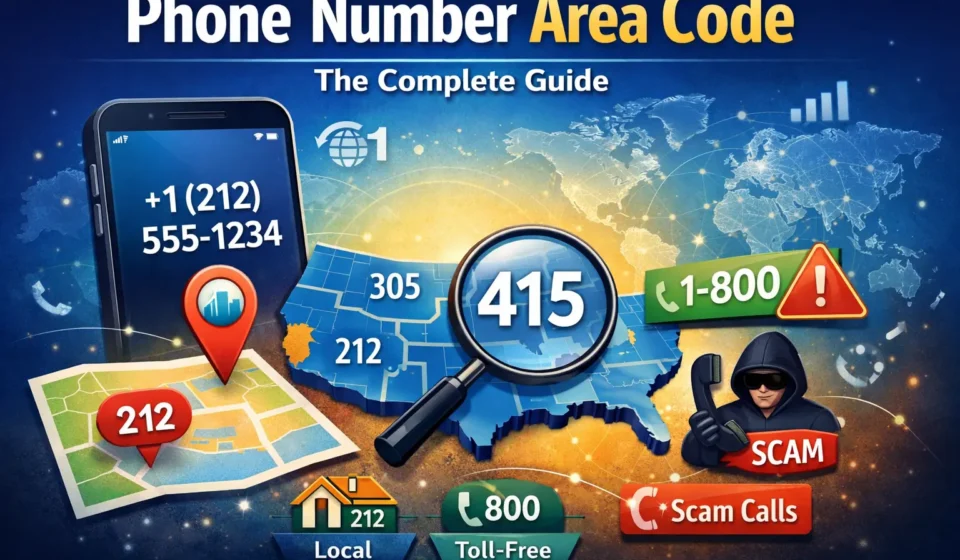

A phone number area code is one of the most important elements of modern telecommunications. Whether you are making a local call, running a business, verifying a caller, or protecting yourself from scams, understanding how area codes work can help you communicate more efficiently and safely.
Despite being a familiar concept, many people still don’t fully understand what an area code actually represents, why it exists, and how it affects phone calls. Businesses rely on area codes to build trust with local customers, while individuals use them to identify where calls originate.
This comprehensive guide explains everything about phone number area codes — from the basics to advanced concepts, practical uses, and potential risks.
By the end of this article, you’ll understand:
-
What a phone number area code is
-
Why area codes exist
-
How area codes are assigned
-
Differences between local and international codes
-
How businesses use area codes strategically
-
How to identify unknown area codes
-
Risks such as spoofing and scam calls
-
Future trends in phone numbering systems
What Is a Phone Number Area Code?
A phone number area code is a numerical prefix that identifies a geographic region within a country’s telephone network.
It appears at the beginning of a phone number and helps telecommunications systems route calls to the correct location.
Quick Definition (Snippet-Friendly)
Area code:
A set of digits placed before a phone number that identifies a geographic region within a telephone network.
Example:
Breakdown:
| Component | Meaning |
|---|---|
| +1 | Country code |
| 212 | Area code |
| 555 1234 | Local subscriber number |
In this example:
-
212 identifies a specific region
-
The rest of the number identifies the individual phone line.
Why Phone Number Area Codes Exist
Area codes were introduced to simplify call routing and manage growing telephone networks.
Before area codes existed, telephone operators manually connected calls. As phone usage grew, a standardized system became necessary.
Key Reasons Area Codes Exist
1. Efficient Call Routing
Area codes allow telecommunications systems to direct calls to the correct geographic network quickly.
2. Organizing Telephone Networks
They divide countries into manageable numbering regions.
3. Supporting Billions of Phone Numbers
With billions of users worldwide, area codes help expand numbering capacity.
4. Identifying Call Origin
Area codes often reveal where a call is coming from geographically.
5. Supporting Local vs Long-Distance Calls
Historically, area codes helped determine call pricing structures.
Structure of a Phone Number
Understanding a phone number area code requires understanding the overall phone number structure.
A standard international phone number contains several components.
| Part | Description |
|---|---|
| Country Code | Identifies the country |
| Area Code | Identifies the region |
| Exchange Code | Identifies local telephone exchange |
| Subscriber Number | Identifies the individual phone line |
Example format:
Example:
Breakdown:
| Section | Meaning |
|---|---|
| +44 | Country code |
| 20 | Area code |
| 7946 0958 | Local phone number |
History of Phone Number Area Codes
Area codes were introduced in the mid-20th century to solve growing communication demands.
Early Telephone Systems
Initially:
-
Calls were routed manually
-
Operators connected calls through switchboards
-
Phone numbers were short and local
As telephone usage expanded, this system became inefficient.
Introduction of Area Codes
The North American Numbering Plan (NANP) introduced the area code system in 1947.
Early characteristics included:
-
Three-digit area codes
-
Geographic distribution
-
Large cities received easy-to-dial codes
Example early area codes:
| City | Area Code |
|---|---|
| New York | 212 |
| Los Angeles | 213 |
| Chicago | 312 |
The system quickly expanded globally as telecommunications networks modernized.
How Area Codes Are Assigned
Area codes are not random. They are carefully planned and assigned by telecommunications authorities.
Factors Considered When Assigning Area Codes
Population Density
Regions with larger populations require more phone numbers.
Growth Projections
Authorities predict future demand for phone numbers.
Geographic Boundaries
Area codes usually follow city or regional boundaries.
Infrastructure Capacity
Telecom systems must support the assigned numbering structure.
Types of Phone Number Area Codes
Area codes fall into several categories depending on how they are used.
1. Geographic Area Codes
These represent specific cities or regions.
Example:
| Area Code | Region |
|---|---|
| 212 | Manhattan |
| 415 | San Francisco |
| 305 | Miami |
Businesses often prefer recognizable local area codes.
2. Overlay Area Codes
An overlay area code is introduced when a region runs out of available phone numbers.
Instead of creating a new geographic region, a second area code covers the same area.
Example:
| Region | Area Codes |
|---|---|
| Atlanta | 404, 678, 470 |
This requires 10-digit dialing, even for local calls.
3. Toll-Free Area Codes
Toll-free numbers allow customers to call without being charged.
Common toll-free area codes:
-
800
-
888
-
877
-
866
-
855
-
844
-
833
Businesses use them for customer support lines.
4. Premium Rate Area Codes
These numbers charge higher call fees.
Often used for:
-
Entertainment services
-
Technical support lines
-
Information services
Users should verify such numbers before calling.
How Area Codes Work Technically
Behind the scenes, telecommunications networks use area codes to route calls through switching systems.
Step-by-Step Call Routing
-
User dials a phone number
-
Network identifies the country code
-
System reads the area code
-
Call is directed to the regional switching center
-
Local exchange routes call to the subscriber
This entire process occurs within milliseconds.
How Businesses Use Area Codes Strategically
Area codes are extremely valuable for marketing and customer trust.
Local Presence Strategy
Businesses often use local area codes to appear closer to customers.
Example:
A company operating nationwide might purchase numbers with multiple area codes.
Benefits:
-
Higher answer rates
-
Local brand credibility
-
Better customer engagement
Toll-Free Branding
Companies use memorable toll-free numbers.
Example formats:
1-800-CONTACTS
These numbers are easier for customers to remember.
Call Tracking
Businesses use different area codes to track marketing campaigns.
Example:
| Campaign | Phone Number |
|---|---|
| Google Ads | 212 number |
| TV Ads | 646 number |
| Billboard | 917 number |
This helps measure which marketing channel generates calls.
How to Identify an Unknown Area Code
Receiving calls from unknown numbers is common today.
You can identify an area code by following these steps.
Step 1: Look at the First Few Digits
Example:
Area code = 305
Step 2: Determine the Region
Area codes often correspond to specific cities or states.
Many phone lookup services help identify the location.
Step 3: Check for International Codes
International numbers begin with a country code.
Example:
| Country | Code |
|---|---|
| USA | +1 |
| UK | +44 |
| Australia | +61 |
| Canada | +1 |
Risks Associated with Area Codes
While area codes are helpful, they also create opportunities for fraud and abuse.
1. Caller ID Spoofing
Scammers can fake area codes to appear local.
Purpose:
-
Increase call answer rates
-
Trick victims into trusting the call
2. International Call Scams
Some area codes resemble domestic numbers but are international premium-rate numbers.
Example risk:
You return a missed call and incur high charges.
3. Robocalls
Automated call systems often target specific area codes.
They may pretend to be:
-
Government agencies
-
Banks
-
Delivery companies
How to Protect Yourself from Area Code Scams
Protecting yourself requires awareness and caution.
Best Practices
-
Avoid returning missed calls from unknown numbers
-
Verify suspicious calls
-
Block suspicious numbers
-
Use call-filtering apps
-
Never share sensitive information
Area Codes vs Country Codes
Many people confuse area codes with country codes.
Here’s the difference.
| Feature | Area Code | Country Code |
|---|---|---|
| Purpose | Identifies region | Identifies country |
| Length | Usually 2–3 digits | 1–3 digits |
| Usage | Within a country | International calls |
Example:
| Section | Meaning |
|---|---|
| +1 | Country |
| 213 | Area code |
Area Codes in the Era of Mobile Phones
With mobile phones, geographic location matters less than before.
People can keep the same number even after moving to a new city.
This is called number portability.
Example:
A person may live in Texas but keep a California area code.
Future of Phone Number Area Codes
Telecommunications systems continue evolving.
Major Trends
Increasing Demand for Numbers
More devices require phone numbers:
-
Smartphones
-
IoT devices
-
Virtual numbers
-
Business phone systems
More Overlay Codes
Instead of splitting regions, authorities prefer overlay codes.
Advantages:
-
Less disruption
-
No need to change existing numbers
Virtual Phone Numbers
Businesses now use cloud-based numbers that allow area code selection.
Benefits:
-
Remote teams
-
International expansion
-
Local presence in multiple cities
Practical Use Cases of Area Codes
Understanding area codes provides real advantages.
For Individuals
-
Identify incoming call locations
-
Detect scam calls
-
Manage international dialing
For Businesses
-
Local marketing strategy
-
Customer service lines
-
Call tracking analytics
For Developers
Software platforms use area codes for:
-
Phone verification
-
SMS services
-
Customer identity systems
Quick Reference: Common Area Code Categories
| Category | Example | Purpose |
|---|---|---|
| Geographic | 212 | Regional location |
| Overlay | 646 | Additional numbers |
| Toll-Free | 800 | Free customer calls |
| Premium | 900 | Paid services |
FAQs (People Also Ask)
What is a phone number area code?
A phone number area code is a group of digits that identifies a geographic region within a country’s telephone system. It helps route calls to the correct network before reaching the specific subscriber.
How many digits are in an area code?
Most area codes contain two or three digits, depending on the country’s telephone numbering system.
Can two places have the same area code?
Typically, a geographic area code represents one region. However, overlay systems allow multiple area codes in the same region to increase numbering capacity.
Do mobile phones use area codes?
Yes. Mobile phone numbers also include area codes. However, due to number portability, the area code may not reflect the user’s current location.
Are area codes necessary for local calls?
In many regions today, 10-digit dialing is required even for local calls because multiple area codes serve the same geographic area.
Can scammers fake area codes?
Yes. Through caller ID spoofing, scammers can manipulate the displayed number to show a local area code even if the call originates elsewhere.
Key Takeaways
Understanding phone number area codes is essential in today’s connected world. These simple digits perform a crucial function in global communication by helping telecommunications systems route billions of calls every day.
From identifying a caller’s region to enabling large-scale business communication systems, area codes remain a foundational part of phone networks.
Important points to remember:
-
Area codes identify geographic regions within telephone networks.
-
They help route calls efficiently.
-
Businesses use area codes to build local trust.
-
Overlay codes increase numbering capacity.
-
Mobile number portability means area codes may not reflect current location.
-
Awareness of spoofing and scam calls is essential for safety.
Conclusion
The phone number area code system has evolved from a simple routing tool into a powerful identifier used in telecommunications, marketing, and digital verification systems.
For individuals, understanding area codes helps with call identification, international dialing, and scam prevention. For businesses, they offer branding opportunities, customer accessibility, and data insights.
As communication technologies continue to evolve, area codes will remain a key component of the global numbering infrastructure. New overlay systems, virtual numbers, and cloud communication platforms will expand their role even further.
The takeaway is simple: those few digits at the start of a phone number carry far more meaning and value than most people realize.