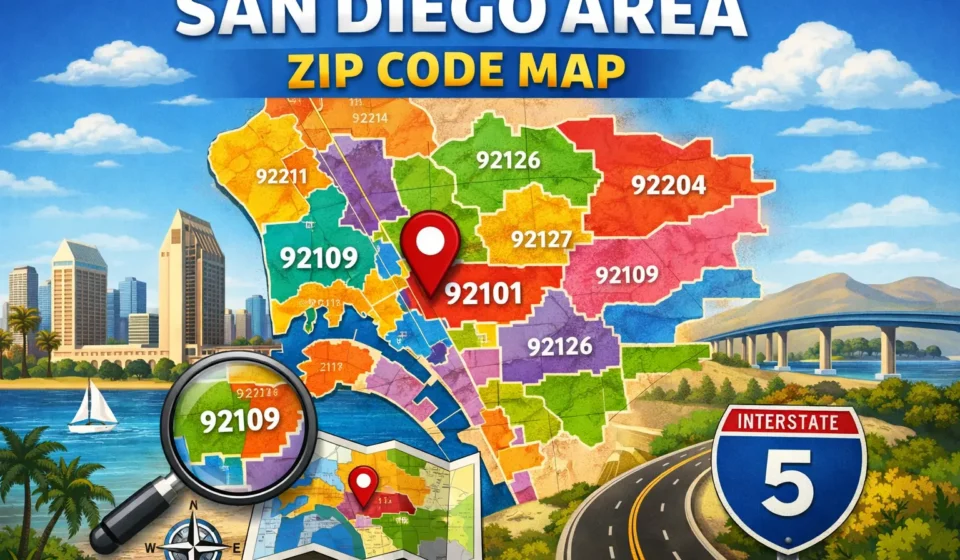

Understanding the San Diego area ZIP code map is useful for residents, businesses, real estate professionals, and travelers. ZIP codes help define neighborhoods, guide mail delivery, and even influence property values, insurance rates, school districts, and business operations.
San Diego is a large and diverse metropolitan area in southern California. Each neighborhood and surrounding suburb has its own ZIP code that helps organize the region geographically. Whether you’re planning to move, start a business, analyze demographics, or simply understand the city better, learning how ZIP codes are distributed across San Diego can provide valuable insights.
In this comprehensive guide, we’ll explore everything you need to know about the San Diego area ZIP code map, including how ZIP codes work, major ZIP code regions, practical uses, and how professionals use ZIP code data for decision-making.
What Is a ZIP Code?
A ZIP code is a postal code system used to organize and deliver mail efficiently across the United States. The system divides cities and regions into specific geographic zones.
Each ZIP code typically contains five digits:
Example:
92101
What Each Digit Represents
| Digit | Meaning |
|---|---|
| First Digit | Broad regional area |
| Second & Third | Sectional center facility |
| Fourth & Fifth | Local delivery area |
San Diego ZIP codes typically start with 92, indicating the southern California region.
Overview of the San Diego Area
San Diego is one of the largest metropolitan areas in California. The region includes:
- Urban neighborhoods
- Coastal communities
- Inland suburbs
- Military areas
- University districts
- Business hubs
The San Diego area ZIP code map covers dozens of ZIP codes that span the city and surrounding communities.
These ZIP codes help define:
- Neighborhood boundaries
- School districts
- Real estate markets
- Business delivery zones
San Diego Area ZIP Code Map Explained
A San Diego area ZIP code map visually displays the boundaries of each ZIP code throughout the region.
The map typically includes:
- ZIP code numbers
- Neighborhood boundaries
- Major highways
- Coastal and inland areas
- Nearby suburbs
ZIP code maps help people quickly understand how the city is geographically organized.
Major San Diego ZIP Codes
Below are some of the most recognized ZIP codes within the San Diego region.
| ZIP Code | Area |
|---|---|
| 92101 | Downtown San Diego |
| 92103 | Hillcrest |
| 92104 | North Park |
| 92106 | Point Loma |
| 92107 | Ocean Beach |
| 92109 | Pacific Beach |
| 92110 | Old Town |
| 92111 | Linda Vista |
| 92113 | Barrio Logan |
| 92115 | College Area |
| 92117 | Clairemont |
| 92120 | Del Cerro |
| 92121 | Sorrento Valley |
| 92122 | University City |
| 92126 | Mira Mesa |
| 92127 | Rancho Bernardo |
| 92128 | Carmel Mountain Ranch |
| 92129 | Rancho Peñasquitos |
| 92130 | Carmel Valley |
| 92131 | Scripps Ranch |
Each ZIP code has its own unique identity and community characteristics.
Coastal San Diego ZIP Codes
Coastal areas are among the most desirable locations in San Diego.
These ZIP codes include beachfront communities and tourism hubs.
| ZIP Code | Area |
|---|---|
| 92037 | La Jolla |
| 92107 | Ocean Beach |
| 92109 | Pacific Beach |
| 92106 | Point Loma |
| 92118 | Coronado |
| 92014 | Del Mar |
Features of Coastal ZIP Codes
- High property values
- Tourism activity
- Ocean views
- Vacation rentals
- Popular restaurants and nightlife
These areas often attract both residents and visitors.
Inland San Diego ZIP Codes
Inland areas offer more suburban living with quieter neighborhoods.
Examples include:
| ZIP Code | Area |
|---|---|
| 92126 | Mira Mesa |
| 92127 | Rancho Bernardo |
| 92128 | Carmel Mountain |
| 92129 | Rancho Peñasquitos |
| 92131 | Scripps Ranch |
Benefits of Inland ZIP Codes
- Larger homes
- Family-friendly neighborhoods
- Better school options
- Less tourism traffic
- More affordable housing
Downtown San Diego ZIP Codes
Downtown San Diego contains multiple ZIP codes that cover business districts, entertainment areas, and residential high-rises.
| ZIP Code | Area |
|---|---|
| 92101 | Downtown Core |
| 92102 | Sherman Heights |
| 92113 | Barrio Logan |
Downtown Characteristics
- High-rise buildings
- Business offices
- Convention centers
- Restaurants and nightlife
These ZIP codes are important for business and tourism.
North County San Diego ZIP Codes
North County includes several cities and suburban communities.
Some major ZIP codes include:
| ZIP Code | Area |
|---|---|
| 92024 | Encinitas |
| 92025 | Escondido |
| 92027 | Escondido East |
| 92028 | Fallbrook |
| 92054 | Oceanside |
| 92056 | Oceanside East |
| 92078 | San Marcos |
North County Highlights
- Growing suburbs
- Business parks
- Family communities
- Access to beaches and mountains
Why the San Diego Area ZIP Code Map Matters
ZIP codes play a larger role than many people realize.
They influence:
- Real estate prices
- Insurance rates
- school boundaries
- demographic analysis
- shipping costs
- marketing strategies
Understanding the San Diego area ZIP code map can help people make smarter decisions.
Real Estate and ZIP Codes
Real estate professionals frequently analyze ZIP codes to understand property markets.
How ZIP Codes Affect Housing
ZIP codes impact:
- Median home prices
- Rental rates
- Neighborhood demand
- property taxes
- school districts
For example:
- Coastal ZIP codes often have the highest property values.
- Inland ZIP codes may offer larger homes at lower prices.
Business Uses of ZIP Code Data
Businesses use ZIP codes to target customers and manage operations.
Examples
- Delivery zones for restaurants
- Local marketing campaigns
- Shipping rate calculations
- Customer demographics analysis
- Service availability
For instance, food delivery services often use ZIP codes to determine where they operate.
How to Read a San Diego ZIP Code Map
Reading a ZIP code map is simple once you know what to look for.
Step-by-Step Guide
Step 1: Locate the city center
Find downtown San Diego as a reference point.
Step 2: Identify surrounding neighborhoods
Look for labeled ZIP code boundaries.
Step 3: Follow geographic features
Major highways and coastline help identify regions.
Step 4: Compare neighboring ZIP codes
Understanding adjacent areas provides context.
Differences Between ZIP Codes and Neighborhoods
ZIP codes do not always match neighborhood boundaries exactly.
Example
A single ZIP code might include:
- Multiple neighborhoods
- Different housing types
- Various income levels
Similarly, one neighborhood may span multiple ZIP codes.
This is why maps are helpful for visual understanding.
ZIP Codes vs ZIP+4 Codes
ZIP+4 codes add four additional digits to provide even more precise mail routing.
Example:
92101-1234
These extended codes help identify:
- Specific buildings
- Office suites
- High-volume mail recipients
However, most people use standard five-digit ZIP codes.
Demographics by San Diego ZIP Code
ZIP code areas can differ dramatically in population characteristics.
Factors often analyzed include:
- Population density
- Median income
- Age groups
- Education levels
- employment sectors
Urban ZIP codes tend to have higher population density, while suburban ZIP codes often have larger households.
Common Use Cases for ZIP Code Maps
The San Diego area ZIP code map serves many practical purposes.
Residents
- Finding neighborhoods
- Choosing schools
- Planning moves
Businesses
- Delivery coverage
- Market analysis
- advertising targeting
Travelers
- Identifying areas near attractions
- booking hotels
- planning transportation routes
Researchers
- Demographic analysis
- economic studies
- urban planning
Comparing San Diego ZIP Codes
Different ZIP codes offer unique advantages.
| Category | Coastal ZIP Codes | Inland ZIP Codes |
|---|---|---|
| Home Prices | Higher | Moderate |
| Population Density | Medium | Low |
| Tourism | High | Low |
| Commute | Shorter downtown | Longer |
Choosing the right ZIP code depends on lifestyle preferences.
Benefits of Understanding ZIP Code Maps
Learning the ZIP code structure of a city provides several advantages.
Key Benefits
- Better geographic understanding
- Improved real estate decisions
- smarter business planning
- targeted marketing
- efficient delivery logistics
Professionals in multiple industries rely on ZIP code mapping daily.
Risks and Limitations of ZIP Code Analysis
While ZIP codes are useful, they also have limitations.
Potential Issues
- Boundaries may change
- ZIP codes do not perfectly represent neighborhoods
- Demographic data may be averaged across diverse populations
Therefore, ZIP codes should be used as a starting point rather than the only source of analysis.
Tips for Using the San Diego Area ZIP Code Map
Here are some practical tips:
1. Combine ZIP Code Data With Neighborhood Research
Look beyond numbers and explore the community.
2. Compare Multiple ZIP Codes
This helps understand market differences.
3. Use Maps for Visual Clarity
Geographic context improves decision-making.
4. Monitor Changes
Cities grow, and ZIP code areas sometimes evolve.
Frequently Asked Questions (FAQs)
What is the main ZIP code for San Diego?
The most recognized central ZIP code is 92101, which covers downtown San Diego.
How many ZIP codes are in the San Diego area?
The greater San Diego region includes dozens of ZIP codes, covering urban neighborhoods, coastal communities, and inland suburbs.
Why are ZIP codes important in San Diego?
ZIP codes help organize mail delivery and provide valuable geographic data used for real estate, business operations, demographics, and logistics.
Are ZIP codes the same as neighborhoods?
No. ZIP codes are designed for postal delivery, while neighborhoods are informal geographic or cultural areas. A ZIP code may include several neighborhoods.
Can ZIP codes affect property value?
Yes. Certain ZIP codes, especially coastal areas, often have higher property values due to location, amenities, and demand.
How can I find a San Diego ZIP code map?
ZIP code maps are commonly used by real estate platforms, government data tools, and mapping services to visualize geographic boundaries.
Conclusion
The San Diego area ZIP code map provides a powerful way to understand how one of California’s most vibrant metropolitan regions is organized. Each ZIP code reflects unique communities, lifestyles, and economic patterns across coastal, urban, and suburban environments.
From downtown high-rises to peaceful inland suburbs and scenic beach neighborhoods, San Diego’s ZIP code system helps residents, businesses, and professionals navigate the region efficiently.
Whether you’re moving to the area, starting a business, studying demographics, or exploring real estate opportunities, understanding ZIP code boundaries can provide valuable insights.
Actionable Takeaways
- Learn the major San Diego ZIP codes before choosing a neighborhood.
- Use ZIP code maps to compare housing markets and demographics.
- Businesses can use ZIP code data for marketing and delivery optimization.
- Real estate professionals rely heavily on ZIP code analysis.
- Always combine ZIP code research with local neighborhood knowledge.
Mastering the San Diego area ZIP code map can give you a deeper understanding of the region and help you make smarter decisions in housing, business, and travel.